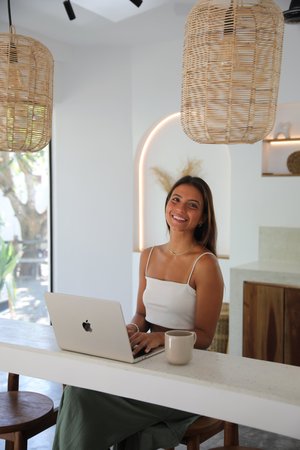
I've noticed something happens when I introduce myself as a filmmaker.
There's a small pause. A flicker of "oh, like... films? Like cinema?" Sometimes it's a brand owner wondering if I'm about to pitch them an arthouse short with no dialogue and a moody soundtrack. Sometimes it's someone who assumes I need a crew of six, a week on location, and a budget that belongs to a much bigger business than theirs.
None of that is what I do. But I understand why the word gets in the way.
The word "filmmaker" is doing me a disservice
Here's what actually happens when you hire me: I turn up, usually alone, with a camera, a drone, and a mic. I spend a day in your space. I shoot. Then I sit down and edit it myself - every cut, every colour grade, every beat of the story is mine from start to finish.
There's no handoff to an editing team. No "we'll get back to you with a rough cut in three weeks." I know exactly what I filmed because I was the one holding the camera, and that means the edit stays true to what actually happened in your space that day.
So really, the job is less "filmmaker" and more: someone who shoots and edits a short story about your brand that makes people feel something and remember you.
That's a mouthful for a job title. But it's closer to the truth than "filmmaker" on its own, which, fairly or not, can sound like it belongs to a different world entirely. One with festivals and funding, not hotel launches and reformer studios.
What I'm actually selling isn't a film, It's a feeling
Brands don't come to me because they want a video. They come to me because they want someone to walk away from their space feeling something, and then act on it. Book the stay. Try the class. Remember the name.
That's a completely different brief to "capture some nice shots of the building." It means I'm not just filming your space, I'm looking for the moment that makes it yours; the way the light hits the pool at 7am, the way your instructor talks to a nervous first-timer, the small imperfect human detail that a stock-photo version of your brand would never show.
Polished and generic is forgettable. Real and specific is what sticks.
Being a solo, female filmmaker changes the room
I'll be honest about something that took me a while to say out loud: being a woman working alone, with just a camera and no crew, changes how people behave in front of it.
There's less performance. Staff relax faster. Guests don't tense up the way they sometimes do around a bigger production. I'm not barking directions from behind a monitor. I'm in the room, quietly watching for the moment that's actually true, not staged. That's not a soft skill I'm adding on top of the filming. It is the filming. The atmosphere I create on the day directly becomes the atmosphere in the final film.
I also think working solo builds a different kind of client relationship. You're not managing a production company. You're talking to the person who's actually going to be there, who remembers your brand from the last shoot, who already knows your tone before we've discussed the brief. That continuity is worth more to most of the brands I work with than a bigger crew ever would be.
So what should you actually expect from me?
Not a "film" in the cinema sense. A short, honest piece of storytelling that:
Is shot and edited entirely by me, so nothing gets lost between the camera and the final cut
Prioritises real, human moments over stock-perfect polish
Is built to make someone feel something in fifteen seconds on a phone screen, not just look nice on a big screen
Comes from someone who's genuinely paying attention to your space, your staff, and your story; not running a template
If "filmmaker" made you picture something bigger, slower, or more removed from your actual business than that, I get it. That's on the word, not on the work. What I do is closer to: quietly capturing what makes your brand worth remembering, and turning it into something that moves people to act.
That's the job. The title's just never quite kept up with it.
-Ells